Open-source software built in the lab for tandem-repeat analysis, epigenomics, and genome exploration.
Fast, technology-agnostic tandem repeat genotyper.
Long-read sequencing enabled comprehensive analysis of tandem repeats (TRs) in genomes, but current long-read TR genotypers are either inaccurate, platform-specific, or computationally inefficient. ATaRVa is a sequencing technology-agnostic genotyper that outperforms existing tools while running an order of magnitude faster. It also supports short-read data, multi-threading, consensus sequence derivation, and motif decomposition, making it well suited for population-scale TR analyses.
Web app for visualizing processed RNA-seq data.
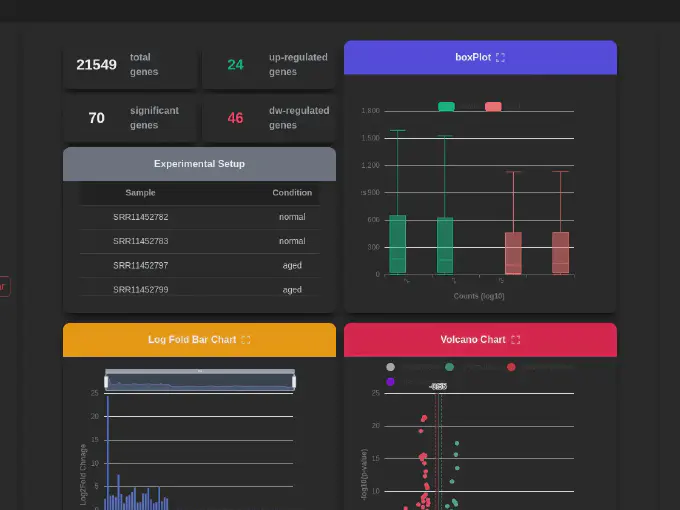
DELTA is a web application for visualizing processed RNA-seq data, built for biologists without the coding background to work in platforms like R or Python. It puts hypothesis testing and quick visualization within reach of researchers at any technical skill level.
Finds tandem repeats via 2-bit sequence encoding.
DiviSSR identifies tandem repeats by treating DNA sequence as numbers rather than strings. Repeats with similar structure turn out to be divisible by a specific number, or leave a consistent remainder — a property the tool is named for, since it can "divide" all simple sequence repeats. Because computers already represent data in binary, DiviSSR encodes DNA as 2-bit numbers to find repeats efficiently, identifying every repeat in the human genome in about 30 seconds on an everyday laptop.
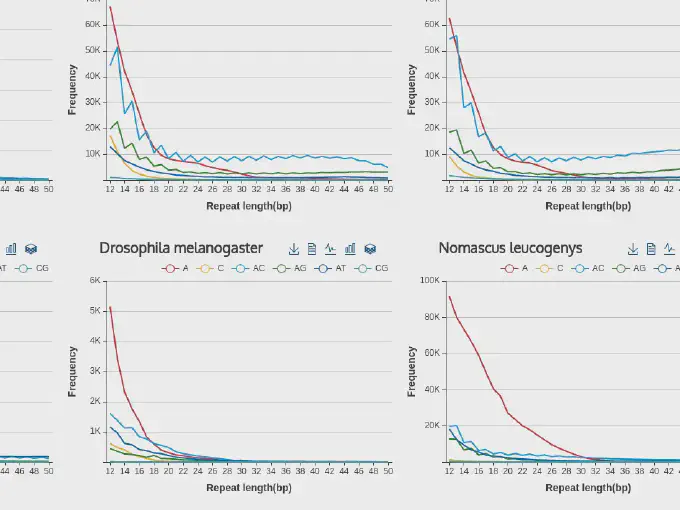
Largest database of short tandem repeats across genomes.
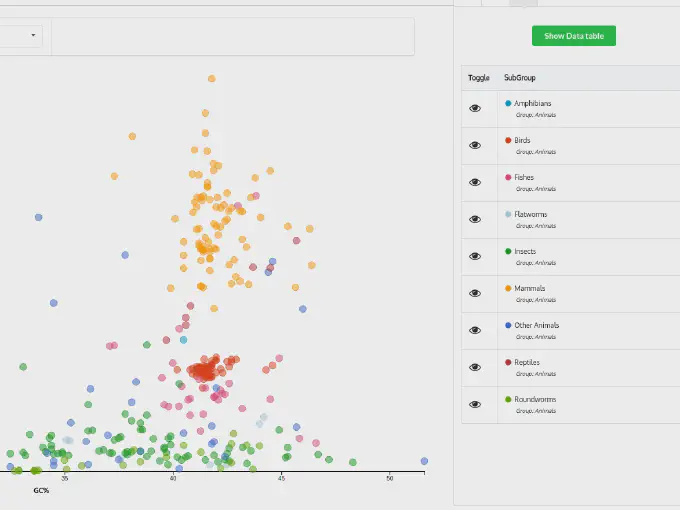
MSDB (Microsatellite DataBase) is the largest collection of short tandem repeat (STR) data across sequenced genomes, currently hosting data for more than 40,000 genomes mined from the NCBI and UCSC repositories. It offers a comprehensive visualization platform for characterizing STRs by motif, length, and genomic context, plus an interactive tool for comparing STR profiles across organisms — in the spirit of Dobzhansky's dictum that "nothing in biology makes sense except in the light of evolution."
6mA identification models from raw nanopore data.
DNA methylation plays a key regulatory role in epigenetics across life forms, and nanopore sequencing enables direct detection of base modifications. While several tools exist for detecting 5-methylcytosine (5mC), few models can reliably identify 6-methyladenine (6mA) from raw nanopore data. Leveraging the motif-driven nature of bacterial methylation systems, NEMO generates 6mA identification models that substantially surpass the accuracy of the previous best method — enabling single-base-resolution study of 6mA in both new and existing nanopore datasets.
Fast, 100% accurate microsatellite identification.
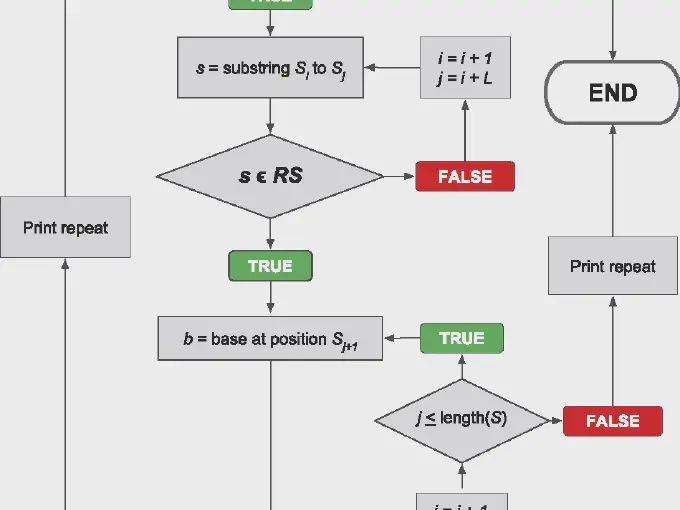
PERF, released in 2019, was the fastest tandem repeat identification tool among its contemporaries. Rather than direct string comparison, it uses a hashing-based approach — known repeat sequences are stored in a hash set with the desired parameters, and genomic subsequences are flagged as repeats based on hash-set membership. PERF brought STR identification in the human genome down to about 2 minutes, a time later beaten by our own DiviSSR.
Identifies and annotates complex tandem repeat loci.
Tandem repeats (TRs) are crucial for genomic functions like protein binding, chromatin modulation, splicing, and gene regulation, and abnormal TR expansions are linked to over 60 neurodegenerative diseases. A locus's function and stability depend on its sequence composition and purity, and recent studies point to the disease-causing potential of non-canonical motif expansions and the complex polymorphism dynamics of nested, overlapping TR loci — underscoring the need for precise motif decomposition. Ribbit addresses this — using a 2-bit DNA representation, it rapidly and accurately identifies TRs of 2–100 bp motif size, resolving complex nested and compound structures while handling indels and substitutions. In comparative analyses on simulated data, Ribbit outperforms existing tools like Dot2dot and TRF in both runtime and accuracy, reporting TR loci in the human genome with lower redundancy than TRF while remaining comparable to variation clusters from recent catalogues — making it a useful tool for studying the evolution and biology of complex TR regions.
Visualizes motif composition and methylation of TR alleles.
VisuaMiTRa is an auxiliary web application, introduced alongside ATaRVa, for interactive visualization of motif-level decomposition and base-level methylation of tandem repeat (TR) alleles across samples. It complements ATaRVa's genotyping output by making allele-specific motif composition and mean methylation profiles directly explorable rather than requiring separate downstream plotting.
No longer actively maintained.